Not sure why psychologists feel compelled to test things that seem common sense but hey, it's their job:
http://psycnet.apa.org/index.cfm?fa=buy ... -04711-001
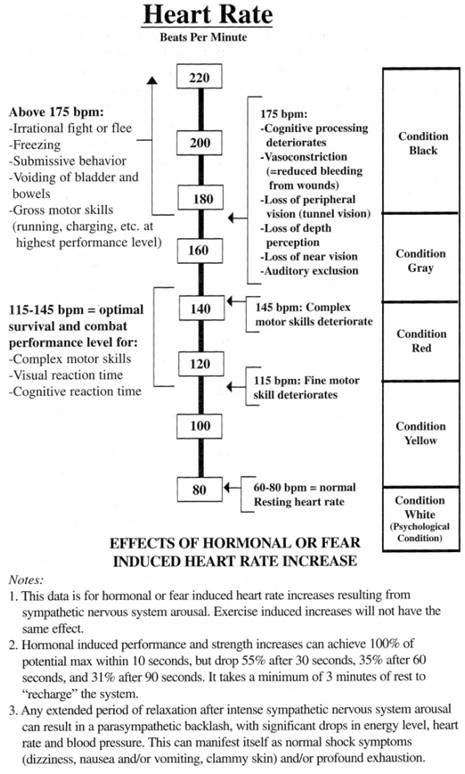
Yes, difficulty of tasks affects heart rate. Heart rate affects cognition and performance.
* If a 5 year old physically threatens you, your heart rate barely budges. A scary looking dude twice your size grabs you by the collar and your heart rate spikes. If you're asked to finger "Mary had a Little Lamb" on a keyboard, your heart rate barely budges. If you're asked to play a duet with Yo-Yo Ma in front of a packed crowd, well . . . you'd get nervous.
** When your heart rate spikes, you lose cognitive and physical abilities. This is why sports that require fine motor skills, hand eye coordination, and complex decision making usually requires the athlete to keep his heart rate at a relatively low rate.
So here's the AA flowchart:
1. Perception of high difficulty & fear of poor results.
2. Heart rate spike.
3. Lowered cognitive and physical abilities.
4. 1,2, and 3 keeps lots of guys clammed up.
5. Poor actual performance if the guy 'goes for it'. (Which only reinforces #1.)
6. On the other hand, 'not going for it' also reinforces #1.
7. Perception of difficulty rises. . . heart rate spikes higher . . .
If you've been with this forum long enough, you'll know that #5 is the go-to cliche' advice = "Just do it!!!" . . . But many who've tried this method and have personally experienced the above flowchart might understand the shortcomings with this 'way in' to pick up.
This is why I usually recommend the 'preparation' method. Increase your knowledge and increase your familiarity. Know what to say and do, in order to lower perception of difficulty. This seems logical doesn't it? Well, here's the problem: Even experts feel anxiety! Their heart rates will not beat faster than somebody who is totally unfamiliar with environment that the experts are accustomed to but even the #1 salesman will experience quickened heart rates when he's shoved into a boardroom. The Champion boxer still feels nervous when he's shoved into the ring with the #1 contender.
I've realized recently that the most talented people of their fields either knowingly or unconsciously exercise a common strategy to deal with lowered cognitive and physical abilities that stem from higher heart rates. It goes something like: Simplify, Acclimate, Intensify.
Simplify:
All of you know that telling yourself to "Calm Down!" doesn't work. Your hear rate is high and you've got lowered cognitive and physical abilities. You can go home or you can try what every expert in all different fields often do. They SIMPLIFY. In physically demanding activities, they stay away from complex motions. They refrain from relying on small muscle groups. They don't chain complicated maneuvers together. In mentally challenging activities, experts often begin with simple exchanges of words or basic concepts that everybody already knows.
Think about the way they choreograph ballets or figure skating. They reserve the most complex moves for later on and begin with basic motions. Think about the first few minutes of a boxing match where the boxers most often 'feel each other out'. Think about a public speaker who begins by greeting and offering basic, common knowledge. You might think this is a task-centric strategy and it is . . . but it offers all these experts a smooth "way in" to their task with minimum risk for a goof-up.
Acclimate:
This happens naturally. The public speaker 'warms up the crowd' while himself becoming more comfortable. The boxer gets a good sense of his opponent's reach and distance control. In all these cases, the heart rate lowers. . . which means cognitive and physical abilities improve so that's when you . . .
Intensify:
This is when experts show off their chops. The figure skater jumps her combinations. The public speaker might raise challenging topics. The boxer throws his combinations for a knock out.
What does this mean for PU?
Simplify:
Stop making it so difficult and simplify your 'way in'. . . If you're still struggling with AA, stick with 3 words or less for openers. Stick with basic vocabulary. Stick with basic, simple movements. Essentially, your strategy should be to do the things you can easily do directly after sprinting on a treadmill.
Acclimate:
Conversations take time. Give the 'game' a chance. Give yourself a chance by weening yourself into more complex topics and strategies. Your heart rate will go down.
Intensify:
This when you "Just Do it!". . .



 CHAT
CHAT


 Oh, nah my fault for not understanding. For the adventurous guys out there, lower your heart rates using this formula. It's one way of doing it.